Last updated:
March 11, 2026

The Top Nexo Alternatives and Competitors in 2026

By 
Alex Marks
Chief Product Officer
Borrow USD against your bitcoin

Ledn has over $10 billion in loan originations since 2018 and counting!

Open an account
Share this post
No items found.

Nexo is one of the most well-known crypto lending projects in the industry. However, it is not without faults. Some users find themselves looking for alternatives or competitors who can offer different features, such as specific asset support, strict jurisdictional consistency, or regular proof of reserves attestations. Let's look at some of the top suggestions for people moving on from Nexo.

What Is Nexo?

Nexo is a suite of crypto services, with one of its main focuses being on lending. It is a CeFi (centralized finance) company, meaning all its loans are handled by human representatives. It also means it is a custodial service where you hand your finances over to them, trusting they will look after them.

Why Users Are Looking for Nexo Alternatives in 2026

There are several reasons why Nexo users might look for alternatives in 2026.

U.S. availability and regulatory considerations

Availability for crypto lending products can change by jurisdiction and over time. Nexo announced it would wind down its U.S. products in 2022 and later reported a return to the U.S. market (product availability may still vary by state and eligibility). Always confirm current availability, terms, and regulatory status directly with the provider before applying.

Transparency and attestations

Transparency practices vary across lenders. Some firms publish periodic proof-of-reserves and/or third-party attestations, while others publish different forms of reporting. Prospective users should review the provider's current transparency reports, their scope (assets vs. liabilities), frequency, and the accounting firm involved before depositing assets or borrowing. (For example, Nexo has previously described using third-party attestations; users should verify what is currently available and what it covers.)

Token-based pricing considerations

Some platforms offer better rates or features for users who hold the platform's token. This can affect overall risk and concentration in a borrower's portfolio. Consider whether preferential pricing tied to token holdings aligns with your risk tolerance and diversification goals.

Key Factors to Consider When Choosing a Nexo Alternative

There are several factors to keep in mind when looking for a Nexo alternative.

Supported Assets

Nexo supports a wide array of assets. If you're a fan of altcoin lending, this needs to be considered, as many other lenders offer a more streamlined service, with a specific focus on a small range of assets.

Availability

Nexo operates across several countries. Make sure whoever you choose as your alternative also offers the same access you need. It is wise to also look into a platform's availability history. The best alternatives will be ones that can offer a more consistent service in your jurisdiction.

CeFi or DeFi

There are many centralized and decentralized lending services in the market. Centralized (CeFi) lenders are custodial, meaning they look after your collateral and directly issue your loans. They can work with both fiat and bitcoin. Decentralized (DeFi) lenders function automatically, via blockchain protocols and smart contracts. What they provide in non-custodial, self-sovereign activity is unfortunately offset by their lack of fiat or bitcoin services.

The Top Five Nexo Alternatives for 2026

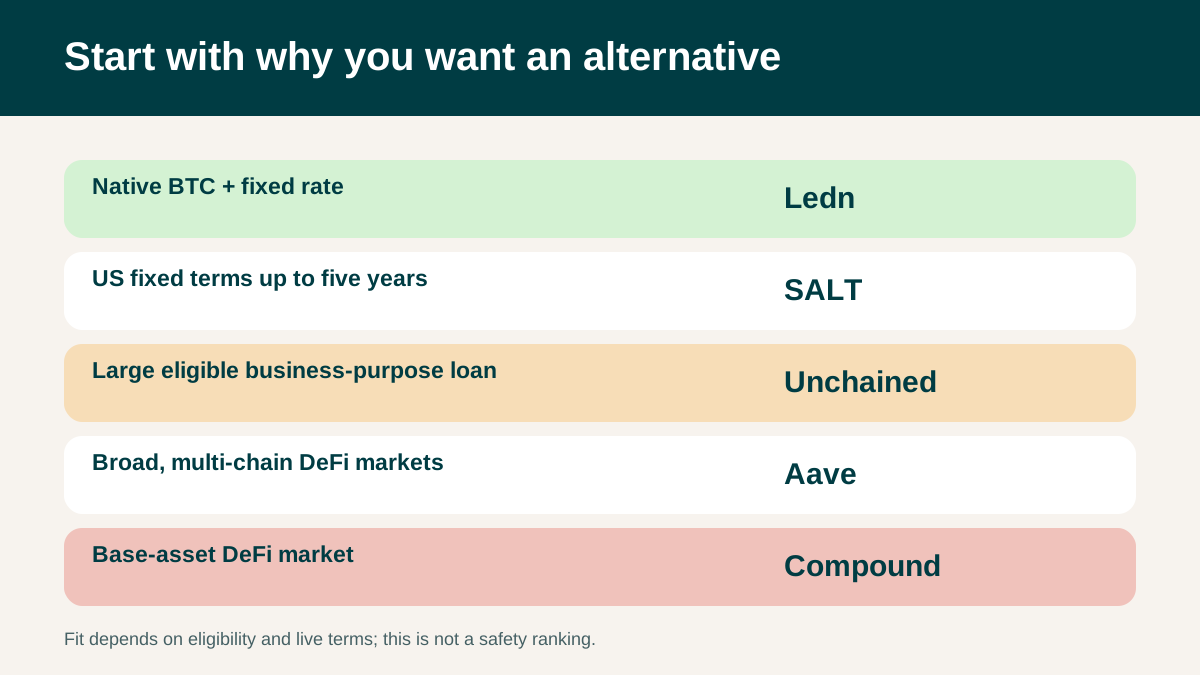
Let's look at five of the top Nexo alternatives in the market. Selection based on publicly available information as of 2026, including transparency reporting, product scope, and jurisdiction availability.

1. Ledn (CeFi)

Ledn focuses on bitcoin-backed lending and publishes proof-of-reserves attestations and regular financial reporting (e.g., Open Book-style disclosures). Loan terms, availability, and product features vary by jurisdiction and eligibility.

Key Features

  • Proof of reserves and open book reports: Ledn publishes its proof of reserve data every six months. Alongside this, Ledn publishes monthly open book reports, which give you an understanding of their financial standing.
  • Consistent US Activity: While Nexo's availability in the US has fluctuated over the years, Ledn has offered their services more consistently. This consistency can be appealing to users who want a steady, uninterrupted service in their region.
  • No cryptoasset of their own: Ledn does not issue their own token, they focus specifically on providing a consistent service. This means you do not need to invest in Ledn to get the best rates.

Drawbacks

  • Only supports Bitcoin: Ledn only offers Bitcoin loans. This is in contrast to Nexo, which supports 50+ assets.
  • Custodial service: Like all CeFi lenders, Ledn is a custodial service, meaning you must trust them to take care of your collateral, as you hand ownership over.

2. Aave

Aave is a leading decentralized lending protocol, running on the Ethereum network. It is arguably the most well-known DeFi lender on the market.

Key Features

  • Decentralized autonomous Activity: With Aave, you do not need to place your trust in a third party to look after your collateral. Rather, it is all locked up within automated smart contracts and blockchain-based activity. Therefore, nobody else ever controls your money.
  • Supports Ethereum Tokens: Aave supports ERC-20 tokens. This means you can use technically use any asset that runs on the Ethereum network. In reality, it is a little more complicated than that, as Aave can only offer loans if they have enough liquidity for the pair you're interested in. Although, architecturally it is possible to support every Ethereum-based asset.
  • Innovative Services: Aave is known for trailblazing features, pushing the boundaries of what is possible within a decentralized network. For instance, Aave offers flash loans, which require zero collateral, but are issued and closed within the space of one block confirmation (useful for harnessing arbitrage opportunities).

Drawbacks

  • No Fiat Support: Like all DeFi services, Aave lacks fiat facilities. The only assets that are compatible are ones that can run natively on the Ethereum blockchain, this makes fiat disallowed. The best alternative is to use stablecoins like USDC or USDT, but these are not exactly the same, as they do not enter your bank account and could become depegged.
  • No Bitcoin Support: Aave does not support direct Bitcoin functionality. BTC is not an interoperable blockchain, and so connecting it to the Ethereum network is extremely difficult. Therefore, it is incompatible with Aave. Instead, you can use Wrapped-BTC, which is an entirely separate asset that's designed to be pegged to Bitcoin's price.
  • Lack of Full Customer Support: Aave is an automated service, therefore, it does not offer fully fledged customer support. You may struggle flagging down a human representative.

3. YouHodler

YouHodler is a CeFi crypto suite, with a focus on lending services.

Key Features

  • Supports Many Cryptoassets: YouHodler works with 50+ cryptocurrencies, giving you significant variety. This is especially important if you're looking for a Nexo alternative that has strong altcoin support.
  • High Loan-to-Value Ratio: YouHodler is known for its high loan-to-value (LTV) ratios. Their loans can reach up to 97%, allowing your collateral to take you further than some other competitors.
  • Request a Custom Loan Tariff: If you want a more personalized lending experience, you can reach out directly to YouHodler and ask for a custom loan tariff. This means they will consider your current financial setup and try to create a bespoke loan for you, with unique terms and rates.

Drawbacks

  • No published proof of reserves: If you're looking for a top Nexo alternative that regularly publishes public attestations, you should verify if YouHodler's current transparency practices meet your needs.
  • High LTVs Increase Your Risk Profile: While a high LTV is great if you have significant cashflow issues, they also increase your chances of failing to pay your loan. With YouHodler's striking 97% LTV, even a small change to your collateral's value can put you in an uncomfortable position. Given how volatile crypto is, and how additionally unpredictable the altcoin market is, this can cause problems in the future.
  • Complex Setup for Newcomers: As far as CeFi services go, YouHodler is more complex than many other Nexo alternatives. While it is simpler than the average DeFi protocol, it can take some time understanding it, relative to other platforms.

4. Compound

Compound is a DeFi crypto lender, similar to Aave.

Key Features

  • Ethereum-Based Asset Support: Being an Ethereum lending protocol means Compound can theoretically offer loans that cover any ERC-20 token. Like Aave, its only limitation is whether there is enough liquidity to successfully do this.
  • Flexible Loan Terms: Compound's loan terms are fluid, meaning they change regularly over short periods. This is because they are calculated by their own algorithms, rather than set by human representatives. In other words, you can get a particularly good deal on some days, if timed right.
  • Solid Userbase: Compound has an active userbase and community, meaning it has sufficient liquidity, and many fans who are ready to offer assistance.

Drawbacks

  • No Fiat or Bitcoin Support: Just like Aave, there is no fiat or BTC support built into its protocol. Being Ethereum-based makes this an impossibility.
  • Limited Customer Service: DeFi services like Compound tend to have very little customer service. As there are few humans in the loop due to all activity happening on-chain, Compound's team is unable to offer assistance if something goes awry.
  • Complex UI for Newcomers: You may find Compound complicated if you're unaccustomed to the DeFi space. It is not as simple and intuitive as some CeFi alternatives, as you're expected to know more about the technical nuances of the crypto space.

5. Coinbase (CeFi)

Coinbase is a world-famous CeFi service.

Key Features

  • BTC Support: Coinbase offers Bitcoin-backed loans, meaning you can use your BTC as collateral.
  • Tax Considerations: Borrowing is generally not a taxable disposal in the U.S., but outcomes vary and liquidation or sale can be taxable. Consult a tax professional. This is especially significant if you are planning to borrow large amounts, or borrow often.
  • High Borrow Threshold: Coinbase offers higher borrowing limits for eligible users, with official documentation citing limits up to $5 million USD when using BTC as collateral.

Drawbacks

  • Jurisdictional Limitations: Coinbase is offering loans in the US, but with jurisdiction limitations (for example, excluding New York in some versions). Confirm current details directly with Coinbase to verify if your state is eligible.
  • No Direct Fiat Support: Despite Coinbase being a CeFi service, its lending tools do not directly support the US dollar. Instead, Coinbase supports USDC, and then offers USDC-to-USD conversion separately.
  • Only Collateralize With BTC: Bitcoin is the primary asset you can use as collateral for these specific loans. This may change in the future, but users should verify current asset support as they streamline exclusively to BTC.

Pros and Cons of CeFi vs. DeFi Lending Platforms

When looking for a Nexo alternative, you'll find yourself questioning whether you want to work with a CeFi or DeFi service. Here are the pros and cons of both.

Pros of CeFi Services

  • Fiat and Bitcoin Support: CeFi services can take Bitcoin as collateral and send fiat to your bank account. There are no DeFi services that can do this. If you are a big BTC user, and need legal tender, then this is the ideal option.
  • Customer Service: CeFi platforms have accessible customer service options. As you have human representatives facilitating your loans, this means you can reach out to staff if you have any questions or concerns.
  • Low Learning Curve: CeFi platforms have a lower learning curve, as they function very similarly to traditional lenders. This is as opposed to DeFi services which often require you to learn new information just to grasp them.

Cons of CeFi Services

  • Custodial Activity: When you work with a CeFi lender, you hand your collateral over to a custodian, meaning they look after your finances for you. Therefore, you need to have a strong level of trust that they will take care of your money. This is why proof of reserve data is so important, as it gives you an indication of their economic situation and safety profile.
  • Regulations Can Limit Usage: CeFi lenders are monitored closely by regulators around the globe. If a situation arises where a regulator believes one of these services is acting dubiously, or they change the law around crypto lending, it can prevent you from accessing the platform. This is partially what happened with Nexo when they departed the US in 2022, citing regulatory complexities, before returning at a later date. Changes in regulatory landscapes can impact platform access.
  • Reduced Innovation: CeFi platforms are not known for their innovations. Oftentimes, they are viewed as being much more conservative with their ideas and lending services, compared to DeFi. That being said, innovations do happen in the CeFi world, and a prime example is Ledn's B2X loans, which let you purchase an equal amount of BTC to the amount you are borrowing. This is a powerful method of accessing fiat whilst securing your position in the Bitcoin market.

Pros of DeFi Lending

  • Non-Custodial Service: DeFi lending is non-custodial, meaning your money is never handed to a third party. However, that does not mean you fully control your finances throughout your loan. Rather, it means your collateral is locked away via smart contracts. Nobody else controls them, but for that period you do not control them, either.
  • Access to More Cryptoassets: DeFi might not work with Bitcoin or fiat, but it does work for a wider selection of assets than most other services (including Nexo, which supports many cryptocurrencies). For instance, if you use an Ethereum-based protocol, you can theoretically use any Ethereum-based asset as collateral. The only limitation would be whether there is enough liquidity for the protocol to support it. That is huge news for altcoin holders and traders.
  • More Innovations: DeFi protocols are applauded for their innovations, such as the invention of flash loans (loans that require zero collateral, but which only operate within one block), and stablecoins with unique architectures.

Cons of DeFi Lending

  • No Fiat or Bitcoin: DeFi lenders support a myriad of assets, but they do not support BTC or fiat. This can be highly limiting to many people looking for a loan.
  • Limited Customer Service: DeFi protocols are meant to have no humans in the loop, therefore, they have limited customer service representatives. If something goes awry, it may be hard to reach out to a real person. With the rise of AI assistants, this could change in the future, but at present, it is still a major point of contention with these services.
  • Evolving Regulatory Landscape: Regulatory scrutiny of DeFi continues to evolve, and availability may vary by jurisdiction. While DeFi protocols operate in a decentralized manner, they often have development teams or corporate structures behind them. This means they are part of an ongoing legislative discussion, and users should be aware that the regulatory environment is still taking shape.

Risks to Consider When Choosing a Nexo Alternative

There are several risks and pitfalls to keep in mind when looking into Nexo competitors. Here are some of the top matters to consider.

Platform Safety Risks

All platforms and protocols have their own unique safety profiles. To ensure you're working with a trustworthy organization, look into their former audits (if they have any). For CeFi services look for proof of reserve attestations, for DeFi services look for smart contract audits. This is where the project's codebase is reviewed by a third party to see if there are errors or areas for exploits.

Look Out For Asset Support

Not every Nexo alternative supports the same assets. For instance, DeFi services are altcoin-heavy but do not have fiat or Bitcoin support. On the flipside, some companies choose to streamline their activity, such as Ledn, which focuses only on Bitcoin loans, but does offer fiat. Think about what your loan plans are, and see what type of asset support is necessary for you.

Different Loan Terms

If you are a regular Nexo user, you are likely to feel comfortable with its user-experience and dashboards. Depending on how much exposure you have to them, it could even feel like second-nature. However, moving to another service will come with a new setup. You need to be careful about how you configure your loans, as each company or protocol will have different terms to consider. Keep an eye out for LTVs, interest rates, and any hidden fees. If you are using an Ethereum-based service, consider what the blockchain transaction fees are like, as they fluctuate daily.

How Ledn Offers an Alternative to Nexo

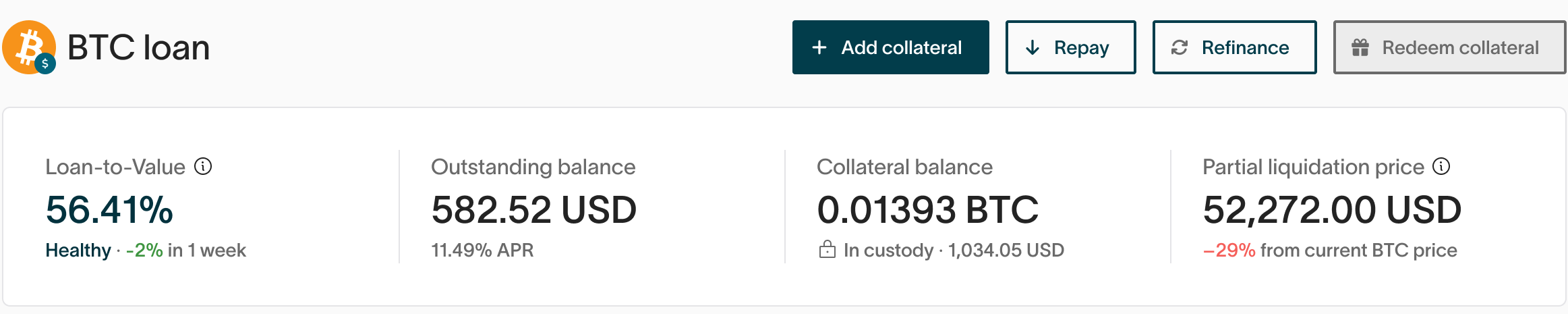
Many Nexo users turn to Ledn as an alternative. They offer regular bi-monthly proof of reserve attestations and monthly open book reports revealing their current financial standing. Alongside this, Ledn has maintained a consistent presence in the US market. These features address common considerations for users, such as jurisdiction restrictions and transparency practices. Ledn offers a streamlined service focused on Bitcoin and stablecoins, providing clear disclosures on loan-to-value ratios and liquidation thresholds.

Conclusion

There are tons of viable Nexo alternatives and competitors on the market, this is just a snapshot of some of the top services out there. Take a look at them individually, and see if they suit your needs. Be sure to pay attention to Ledn, as their track record for transparency and consistency makes them favored among many.

Please note: Availability varies by jurisdiction and eligibility. Borrowing involves risk of liquidation; you can lose collateral. Rates and terms can change.

Disclaimer

This article is sponsored by 21 Technologies Inc. and/or its subsidiaries (“Ledn”) and is for general information, discussion, or educational purposes only and is not to be construed or relied upon as constituting legal, financial, investment, accounting, tax, estate-planning, or other professional advice or recommendation. Please read Ledn’s full Risk Disclosure Statement and Disclaimers.

The experts opinions:

CTA Block 1

Ledn was created by people who believe in Bitcoin’s power to revolutionise finance and build wealth reliably.

CTA Button


CTA Block 2

Ledn was created by people who believe in Bitcoin’s power to revolutionise finance and build wealth reliably.

CTA Button

CTA Block 3

Ledn was created by people who believe in Bitcoin’s power to revolutionise finance and build wealth reliably.

CTA Button

CTA Block 4

Ledn was created by people who believe in Bitcoin’s power to revolutionise finance and build wealth reliably.

CTA Button