The 6 Best DeFi Crypto Loan Platforms [July 2026]


Ledn has over $10 billion in loan originations since 2018 and counting!
This guide explains DeFi lending and compares several well-known platforms to help you understand key differences and risks. This is not financial advice.
Disclosure: This article is for informational purposes only and does not constitute financial, investment, legal, or tax advice. DeFi lending involves significant risks, including smart contract vulnerabilities, liquidation, stablecoin depegs, and total loss of funds. Terms and availability vary by protocol and may change.
What is a DeFi Crypto Loan?
A DeFi crypto loan is a loan obtained in a decentralized financial environment. These loans allow borrowers to secure funds without needing a traditional financial intermediary.
DeFi loans are on-chain and can increase transparency, but they carry risks including smart contract vulnerabilities, oracle failures, and liquidation.
Read more: Cefi vs DeFi - Key Differences Explained
How Do DeFi Crypto Loans Work?
DeFi crypto loans work via borrowers locking up their digital assets as collateral in a smart contract. In exchange, they receive a loan in a stablecoin or another cryptocurrency. The process is entirely automated, governed by DeFi DApps using online protocols and code, designed for efficiency and on-chain transparency for both parties.
Read more: How to Borrow Against Crypto - Decoding Crypto Loans
Five Well-Known DeFi Crypto Loans 2026
Different platforms have strengths and drawbacks. The appropriate choice depends on your risk tolerance, liquidity needs, and the service’s unique quirks.
DeFi Lending Comparison Table
Take a look at our quick comparison table for an overview.
1. Aave
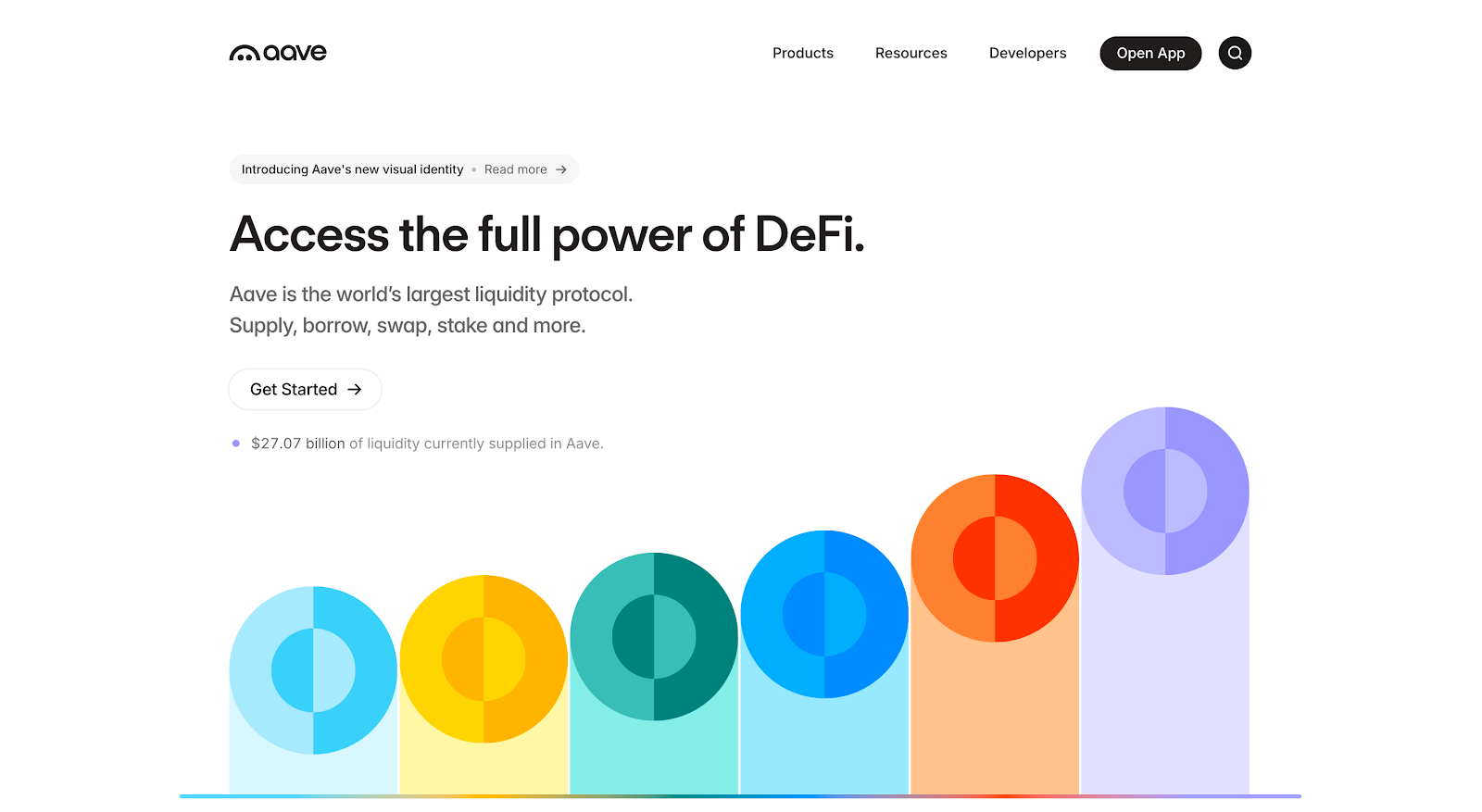
Aave is a pioneering DeFi lending platform with a long legacy in the space. Over the years, it has built a reputation for being innovative in the crypto sector, as it introduced flash loans (unsecured extremely short loans), and interest rate switching which alternates between stable and variable interest rates.
Over time, Aave has grown into an ecosystem of its own. Not only does it have a core userbase, but it now has its own staking capabilities and its own stablecoin (GHO). Aave is deployed on multiple networks, extending its reach across the DeFi space.
Pros:
- Sophisticated tools for power users in crypto.
- Deployed on multiple networks for broader access.
- Flash loans available.
- Can switch your interest rates from stable to variable.
- AAVE staking may offer rewards, subject to protocol rules and risks (including slashing or token price risk).
- Compatible with many crypto wallets.
Cons:
- Not beginner-friendly.
- Fluctuating rates can lead to unpredictability in earnings.
- No access to BTC.
Read more: Aave vs Compound: DeFi Lending Comparison
2. Compound
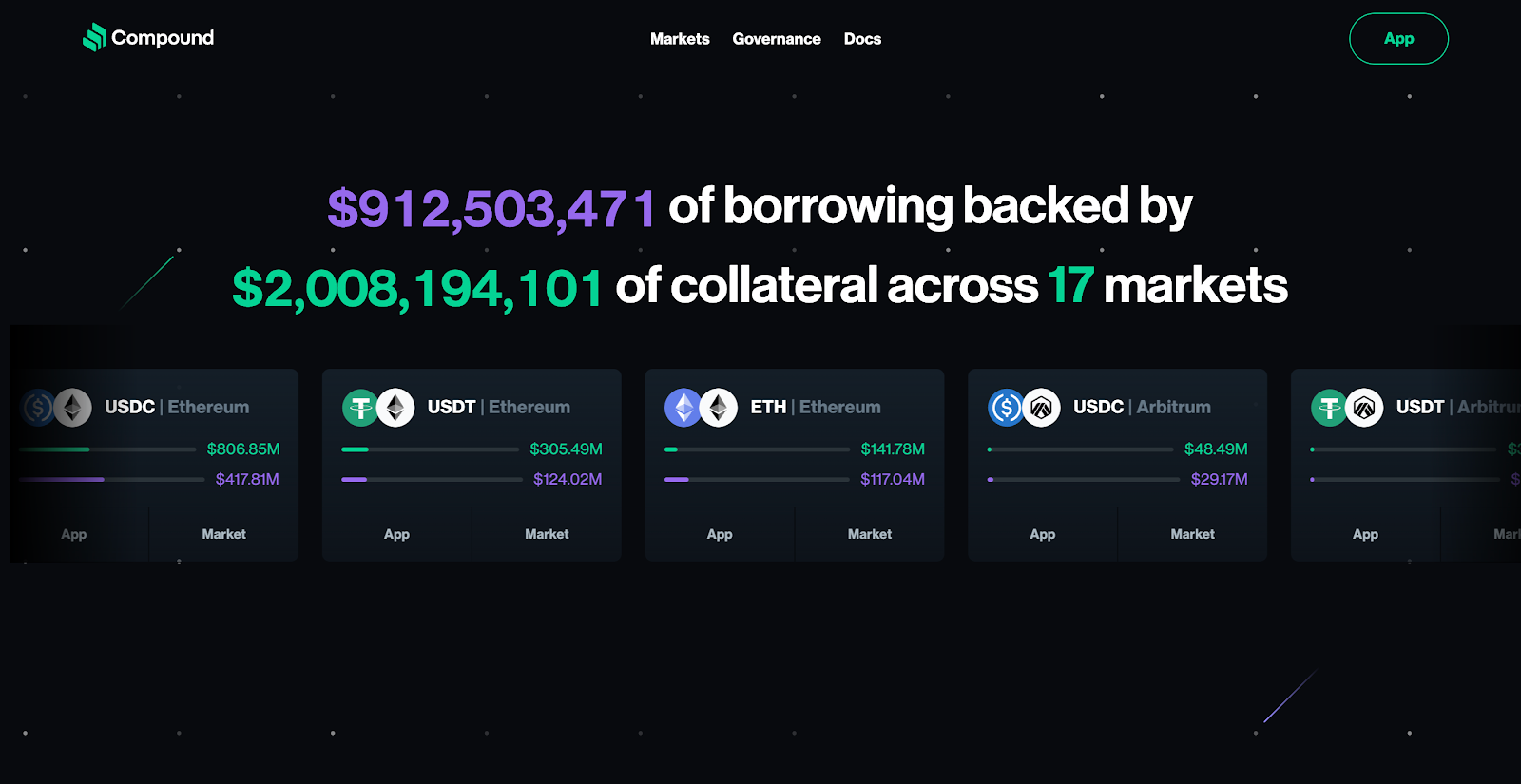
Compound holds a significant place in the DeFi sector as a protocol that allows users to tokenize their lending positions. For instance, if you deposit a certain asset (such as ETH or USDC) then you can receive a token in return that represents that position, referred to as cTokens. Compound Finance has also been noted as a catalyst for the 2020 "DeFi Summer," marking it as a meaningful participant in the space.
Pros:
- COMP governance incentives may apply depending on market conditions and protocol settings.
- Tokenizes your lending position, which you can sell or trade.
- Supports common Web3 wallets (including hardware wallets via wallet software).
- Earn compound interest.
Cons:
- Compound still has a learning curve compared to many centralized alternatives.
- Limited to Ethereum-based assets, so no access to BTC.
3. Curve
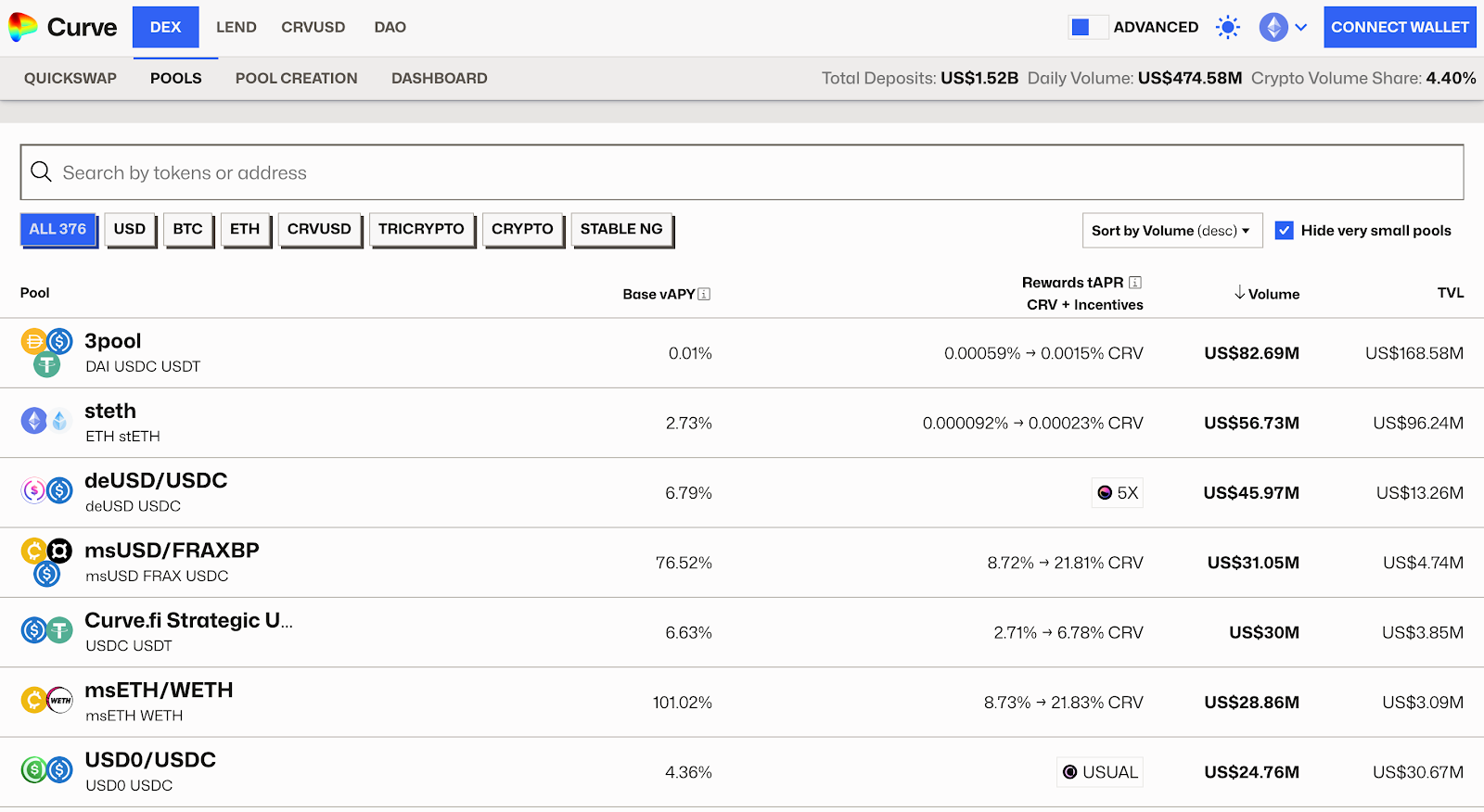
Curve is typically known for its decentralized exchange, but in 2024 the service launched its own lending protocol, named LlamaLend. While it has its own name, it is very much within the Curve ecosystem.
LlamaLend manages loans by algorithmically attempting to maintain your loan’s health through soft liquidations. This is where the protocol converts some of your collateral into your borrowed asset to stabilize your situation. While designed to be less abrasive than a hard liquidation, soft liquidations can still reduce your collateral and may crystallize losses.
Pros:
- Automatically enables soft liquidations to stabilize your position (where applicable).
- Stake from within the platform.
- Compatible with many crypto wallets.
Cons:
- Parameters vary by market; users should read the market risk settings carefully.
- Steep learning curve, designed for experienced DeFi users.
- Limited assets available, with many being less common cryptoassets.
- No access to BTC.
4. Liquidity

Liquity is a DeFi platform designed for a direct borrowing experience. Its interface is stripped back, which can be appealing to those looking for a minimalist approach. It features high loan-to-value (LTV) ratios, allowing for higher borrowing capacity, though this naturally increases the risk of liquidation.
Liquity uses a protocol-issued stable asset designed to target a USD value. Like all stable assets, it can deviate from its target price (depeg), and protocol rules may affect borrowing costs and redemption.
Pros:
- Minimalist interface.
- High LTVs available.
Cons:
- Native stablecoin risk: Like any stablecoin, it is subject to depegging risks.
- Protocol rules regarding redemptions can be complex.
- Very limited assets.
- No access to BTC.
5. Save.Finance (Formerly Solend)
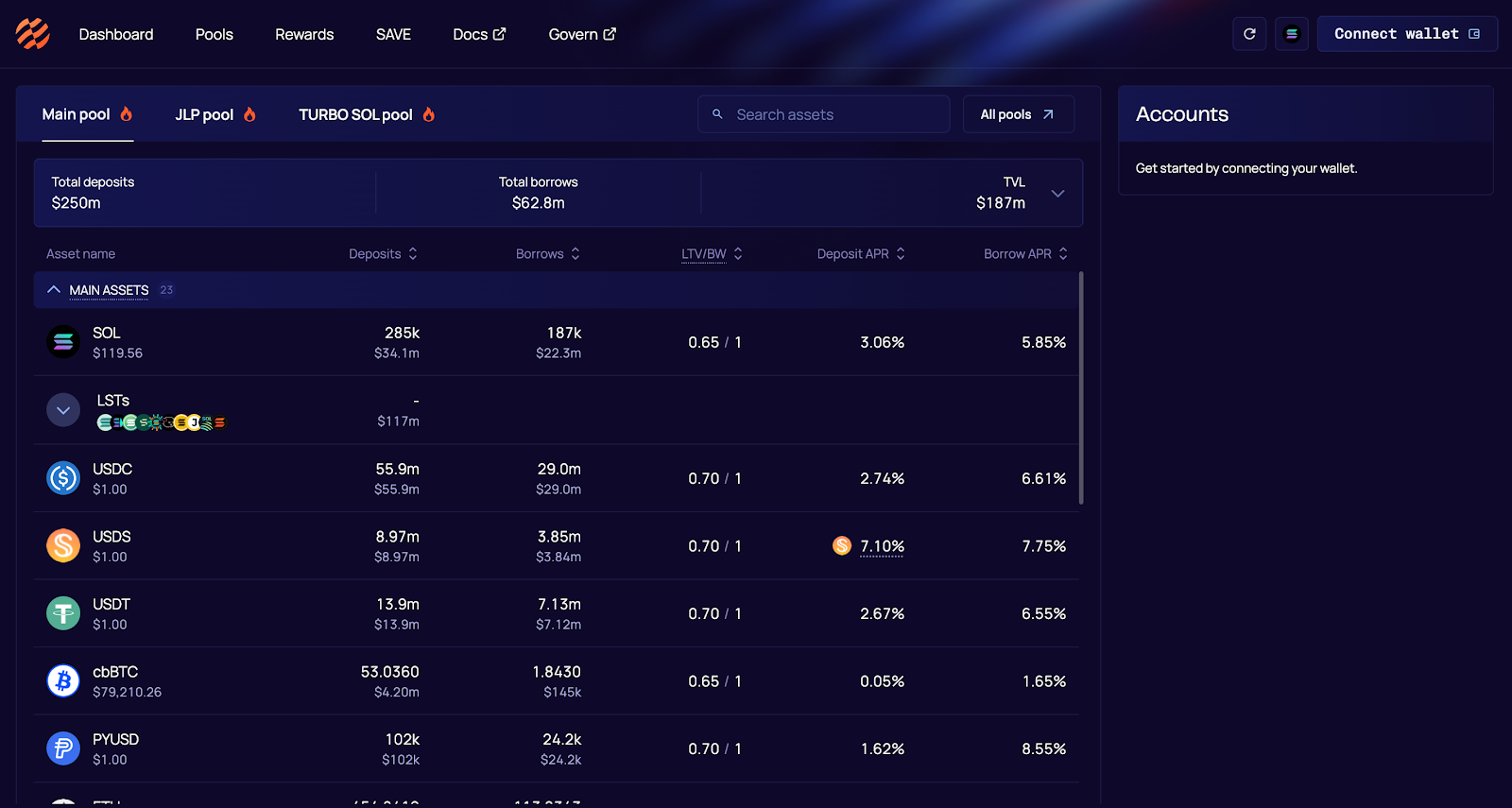
While Ethereum-based DApps tend to get the most attention, Solana’s userbase has been growing, and Save.Finance is a key part of that ecosystem. This Solana-based protocol offers borrowing and lending tools for a range of SOL-based cryptocurrencies.
Users can access non-native assets like ETH via the Wormhole bridge. However, bridging can introduce additional smart contract and counterparty risks, and losses incurred during bridging can be irreversible.
Pros:
- Access to Solana and SOL-based tokens.
- Simple service for borrowing established stablecoins like USDC and USDT.
Cons:
- Bridging risk: Accessing non-Solana assets requires bridging, which is prone to specific security vulnerabilities.
- Rates and LTV parameters vary by market.
- No direct access to native BTC.
Popular DeFi Crypto Loan Alternatives
Some users prefer CeFi platforms like Ledn for customer support, off-chain processes, and disclosed custody arrangements.
Ledn is a centralized company that offers a mix of crypto and fiat lending services. This dual offering provides users with a level of accessibility not commonly found in decentralized systems. One of the primary advantages is the ability to use Bitcoin as collateral.
Human Representatives Rather than Protocols
While some favor the automated nature of DeFi, many prefer to work with human representatives. One of the benefits of Ledn is that users can reach out for support. In the event that something goes wrong, having a point of contact is a significant contrast to DeFi services where customer support is often nonexistent.
Supports BTC
Most DeFi lending protocols support ETH, but few support native BTC due to the technical challenges of building on the Bitcoin blockchain. Ledn supports native BTC, allowing you to work directly with Bitcoin without relying on "wrapped" representations.
Receive Fiat For Your Collateral
CeFi lenders often make it easier to receive direct fiat disbursement; DeFi borrowing is typically in crypto or stablecoins and may require off-ramping through third parties. This removes the extra steps and potential costs associated with converting stablecoins to fiat manually. Funding times vary by verification status, jurisdiction, and banking rails; some clients receive funds within ~24 hours.
Commitment to Transparency
Ledn maintains a transparency-focused approach regarding its financial health. It publishes monthly Proof of Reserve data and Open Book Reports, providing clients with verified insight into the platform's operations.
B2X Loans
Ledn's B2X loans allow users to increase their Bitcoin holdings. When you take out a B2X loan, you receive a Bitcoin-backed loan and an equivalent amount of BTC. B2X increases exposure and also increases downside risk, including liquidation risk. It may not be suitable for all clients and is subject to eligibility and jurisdiction requirements.
Check if your jurisdiction permits B2X Loans >
How DeFi Loan Interest Rates Are Determined
DeFi loan rates are typically dynamic and constantly changing. Here are some of the typical methods used for calculation.
Dynamic Supply and Demand
DeFi rates are highly sensitive to "utilization" - the ratio of borrowed assets to total liquidity in a pool. High utilization typically leads to higher interest rates to encourage more lending and discourage borrowing, while low utilization leads to lower rates.
Market Conditions
If you are borrowing a scarce asset, you may pay a premium. Conversely, lending a scarce asset may offer higher rewards. DeFi loan quality can fluctuate significantly, especially in the altcoin space.
Protocol-Specific Formulas
The DeFi market is known for experimentation. Many services have unique metrics for determining loan rates. It is essential to grasp the specific economic model of a protocol before participating, as they do not all function the same way.
The Different Types Of DeFi Crypto Loans Available in 2026
Flash Loans
Flash loans allow you to borrow crypto without collateral if the amount is returned within the same blockchain transaction. This is useful for arbitrage but requires significant technical knowledge.
Read more: Crypto Loan Without Collateral: The Complete Guide
Undercollateralized Loans
These allow loans with collateral worth less than the borrowed amount, often relying on alternative risk mitigation like credit scores or social recovery.
Peer-to-peer (P2P) Loans
P2P loans connect borrowers directly with lenders, allowing for more personalized terms but increasing counterparty risk if a borrower defaults.
Read more: Crypto peer-to-peer lending: A beginner's guide
Overcollateralized Loans
The most common type, where borrowers lock up assets exceeding the value of the loan. This reduces lender risk and automates liquidation if the collateral value drops too far.
What are the Benefits of DeFi Crypto Loans?
- Speed: Transactions can be fast, but speed depends on network conditions, gas fees, and protocol design.
- Transparency: Transactions are recorded on public blockchains.
- Accessibility: Generally accessible with a compatible wallet and network access, though access may be restricted by interfaces, local law, or technical requirements.
- No Credit Checks: Many DeFi loans do not use traditional credit checks, but require collateral and may have eligibility constraints.
The Risks of DeFi Loans in 2026
- Smart Contract Vulnerabilities: Bugs in code can lead to total loss of funds.
- Collateral Volatility: Rapid price drops can trigger sudden liquidations.
- Regulatory Uncertainty: Evolving global laws may impact platform availability or legality.
- Operational Security: Platforms may be targets for specialized hacks, exploits, or oracle risks. Oracle failures can result in incorrect price data being fed to the protocol, potentially triggering erroneous liquidations.
- Protocol Risk and Bad Debt: Changes in parameters, oracle failures, or extreme market moves can create bad debt or impair withdrawals in some designs.
- Lack of Insurance: DeFi deposits are typically not insured by government programs. Some protocols or third parties offer coverage products, but these are often limited in scope.
DeFi Loan Fees to Watch Out For
Gas Fees
Every transaction incurs a gas fee to the network. These can become very high during periods of network congestion, particularly on the Ethereum blockchain. Some services require you to use multiple smart contracts, each subject to its own fee.
Borrowing Fee
Some protocols charge an upfront, one-time fee to cover operational costs, distinct from the ongoing interest rate.
Flash Loan Premiums
While technically uncollateralized, most flash loan providers charge a small percentage premium for the service.
How is DeFi Lending Different from Traditional Lending?
DeFi crypto lending platforms use blockchain technology to redefine how loans are processed, secured, and managed.
Read more: CeFi vs. DeFi: Key Differences Explained.
1. No Intermediaries
- Traditional Lending: Involves centralized organizations acting as third parties who handle and look after funds. They are custodial in nature.
- DeFi Lending: Utilizes smart contracts on blockchain networks to automate the lending process. This removes the need for third parties, reducing costs and streamlining operations.
2. Efficiency
- Traditional Lending: Processing times can range from hours to days, depending on the service and banking rails.
- DeFi Lending: Thanks to smart contract automation, transactions and loan disbursements can occur almost instantaneously, subject to network conditions.
3. Flexibility
- Traditional Lending: Products and services are relatively standardized, with innovation occurring at a slower pace due to regulatory constraints and risk management.
- DeFi Lending: DeFi is continuously evolving, introducing products like flash loans and yield farming. The ecosystem is characterized by rapid experimentation.
4. Regulatory Landscape
- Traditional Lending: Heavily regulated, ensuring consumer protection but potentially limiting operational flexibility.
- DeFi Lending: Operates in a more obscure regulatory framework, which has fueled innovation but also introduced risks related to compliance and consumer protection.
Conclusion
By understanding the different types of DeFi loans and their associated risks, you can make more informed financial decisions. Platforms like Ledn demonstrate how centralized innovation can provide efficient lending solutions with a strong emphasis on transparency and human support.
Disclaimer
This article is sponsored by 21 Technologies Inc. and/or its subsidiaries (“Ledn”) and is for general information, discussion, or educational purposes only and is not to be construed or relied upon as constituting legal, financial, investment, accounting, tax, estate-planning, or other professional advice or recommendation. DeFi lending and crypto borrowing involve significant risk, including the risk of total loss of the amount invested. Please read Ledn’s full Risk Disclosure Statement and Disclaimers.
The experts opinions:

CTA Block 1
Ledn was created by people who believe in Bitcoin’s power to revolutionise finance and build wealth reliably.
CTA ButtonCTA Block 2
Ledn was created by people who believe in Bitcoin’s power to revolutionise finance and build wealth reliably.
CTA ButtonCTA Block 3
Ledn was created by people who believe in Bitcoin’s power to revolutionise finance and build wealth reliably.
CTA ButtonCTA Block 4
Ledn was created by people who believe in Bitcoin’s power to revolutionise finance and build wealth reliably.
CTA Button